Life in the lanes: Planting snowdrops in the green
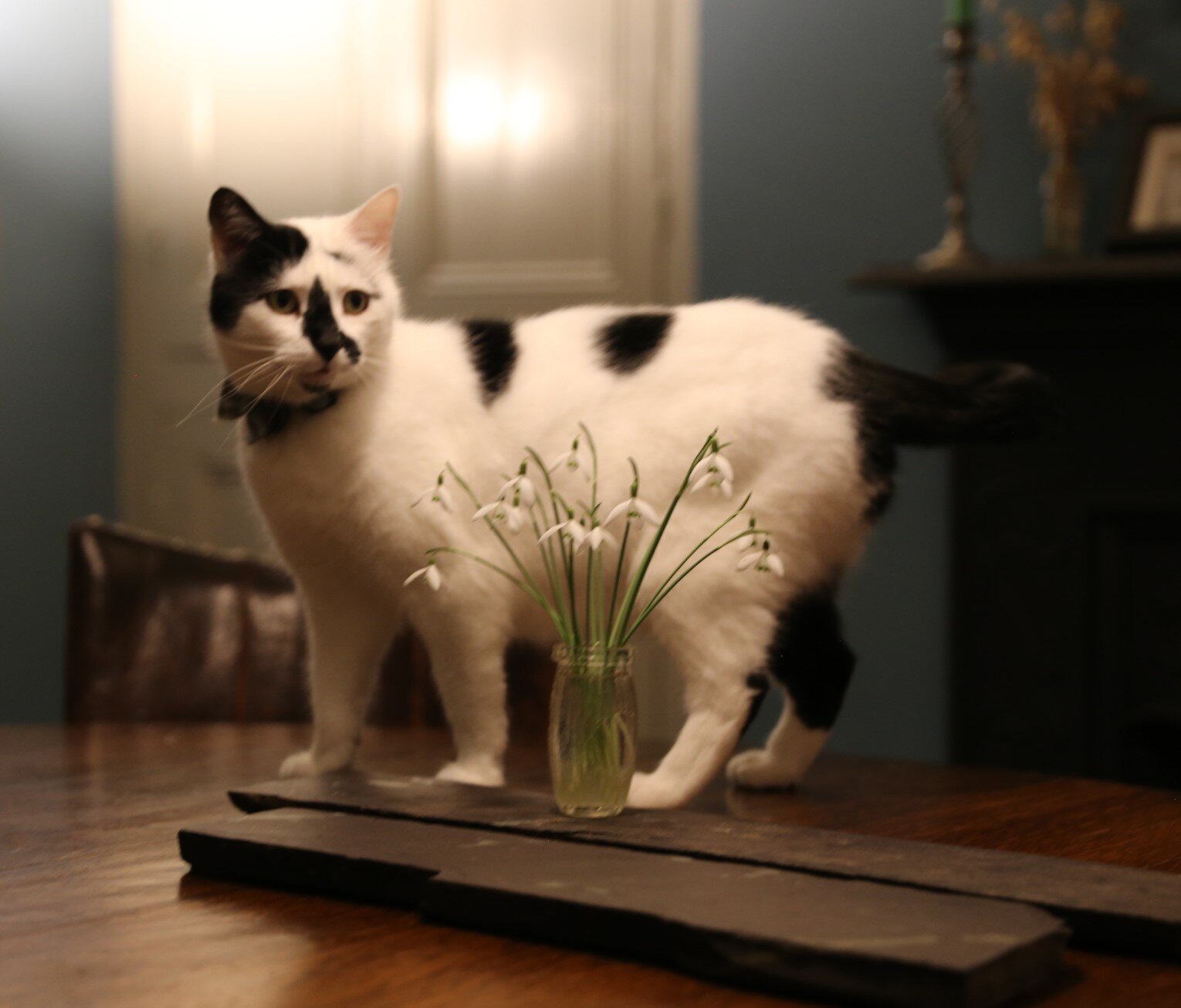
A lady walks her dog around our village. We have exchanged “hellos” for many years. She walks a handsome Schnauzer that gets ruffled at the sight of our cat, Percy. The dog barks, but Percy just stands his ground. With hairs on end, he stares down the dog from a stone wall. He knows full well the dog is held back on a lead. The lady always jokes that Percy just likes to tease him.
A few weeks ago, we crossed paths on a cold and foggy Saturday. Percy had followed us up the lane. He uses the dry stone walls as his own elevated roadway. We met her at a natural viewpoint where a bench looks out over the Penistone Viaduct. From there, you can see the iconic Emley Moor Mast. These are the landmarks of our corner of northwestern-most South Yorkshire.
She said, “Are you two in the house on the end? You like gardening… would you like some snowdrops?”
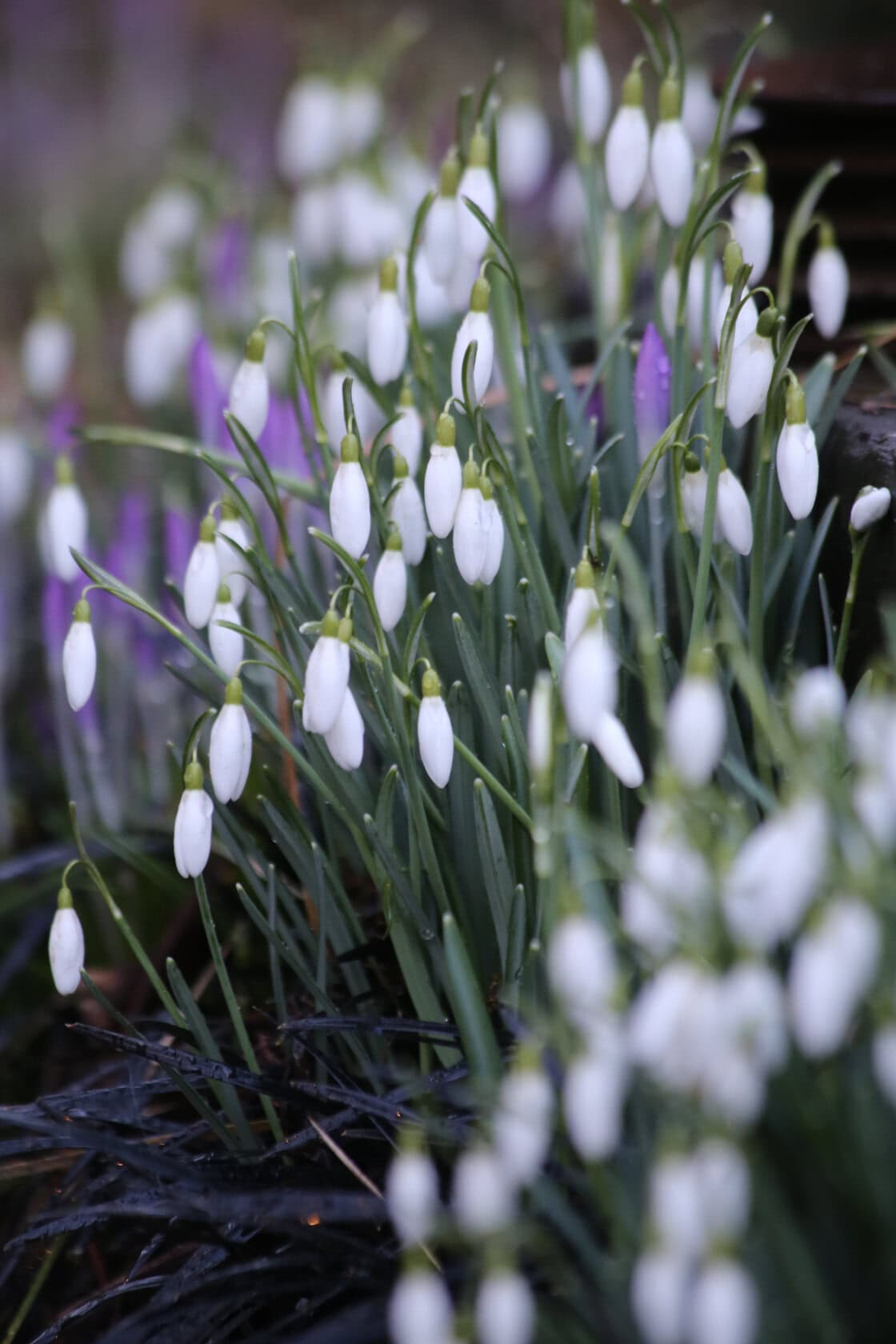
The offer
I was more than interested. I wondered how many she had and what type. She explained that her husband had passed away. There was a bed tucked around a hidden side of the house that she struggled to maintain. I was welcome to come round and take as many as I liked.
She suggested I could plant them around the village lanes. I had already had the same idea. Later that day, I went to view the goods. I returned on Sunday with the right tools and trugs to lift the bulbs. The lady introduced herself as Jenny, and we enjoyed some garden chat before she took cover from the rain, while I lifted the bulbs. This was the perfect opportunity for planting snowdrops in the green. It is often the most reliable way to get them established in good numbers.
More than just bulbs
There were about 20 good-sized clumps. It wasn’t too overwhelming. Jenny also offered me anything else from the bed I fancied. By chance, nearly everything there was exactly what I wanted. I needed them for my new allotment experiments. I am currently creating a planted meadow on fertile soil.
I’ve noticed certain species persist well in fertile rough grass, including: oriental poppies, daylilies, and Geranium psilostemon (or a similar cultivar like ‘Patricia’). I could tell the Geranium by the red, horn-like buds pushing through the soil. These species succeed in rough grass because their foliage emerges early. They push through the grass thatch before the competition catches up. But that’s a topic for another blog!
Lifting and dividing
On Sunday morning, I lifted the snowdrops in the rain. They were growing in heavy wet clay. We live just a few hundred meters down the valley, but our soil is different. Our garden and allotment sit on a dreamy patch of dark sandy loam.
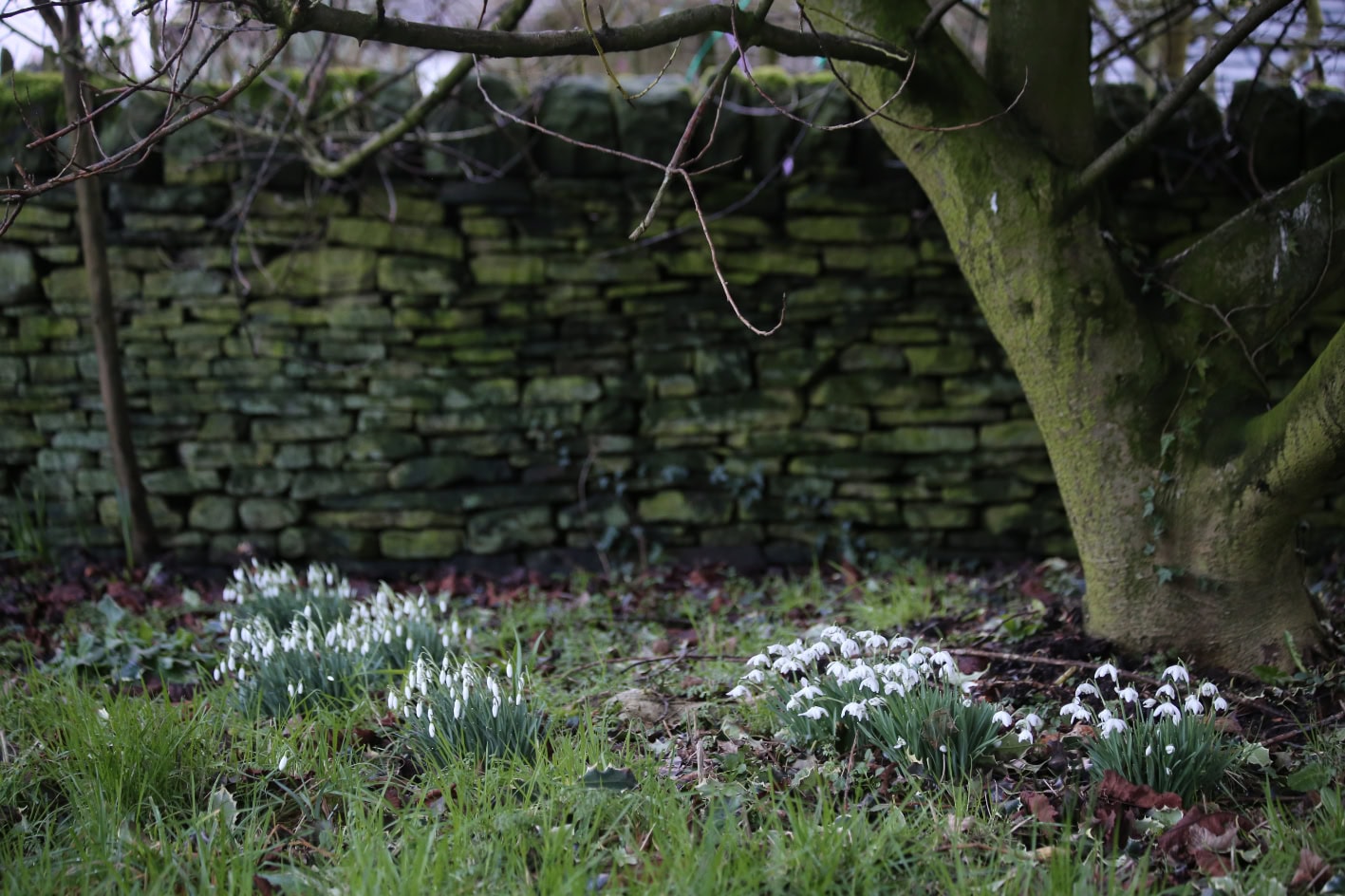
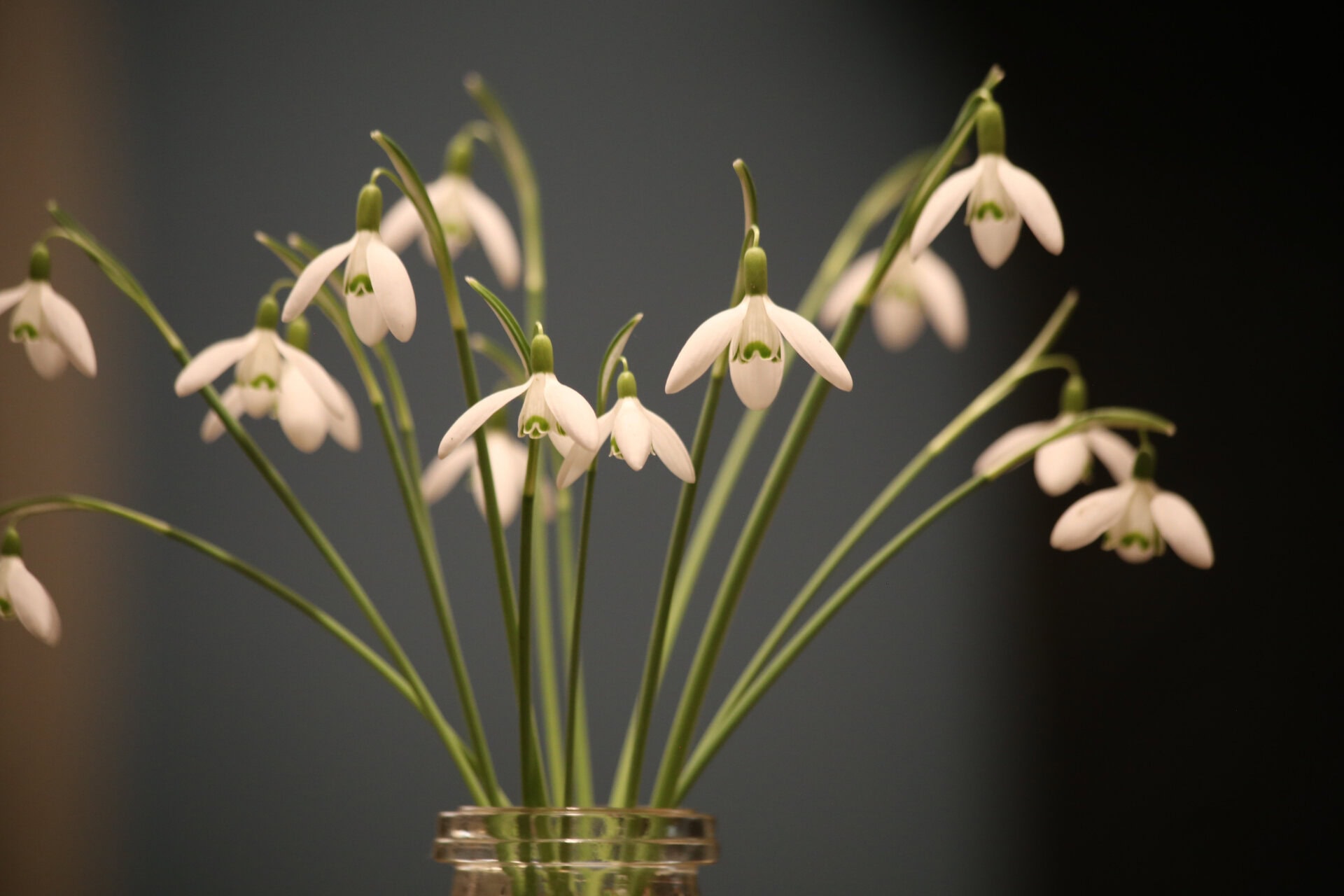
A healthy mature clump can hold hundreds of bulbs. The biggest ones are flowering now. However, the sheer volume of smaller bulbs was impressive. The 20 clumps yielded about 2,000 bulbs. By planting snowdrops “in the green,” the leaves are still active. You can see exactly where they are going and ensure they settle in quickly.
I moved six trugs of divided perennials and snowdrops down the road. I knew the following weekend would be busy. To compensate, I booked a day off work to get them in the ground immediately. Leaving plants in buckets too long compromises their vigour. There’s nothing less fun than planting a heavy load of dying plants. I wasn’t going to make that mistake.
Planting the lanes
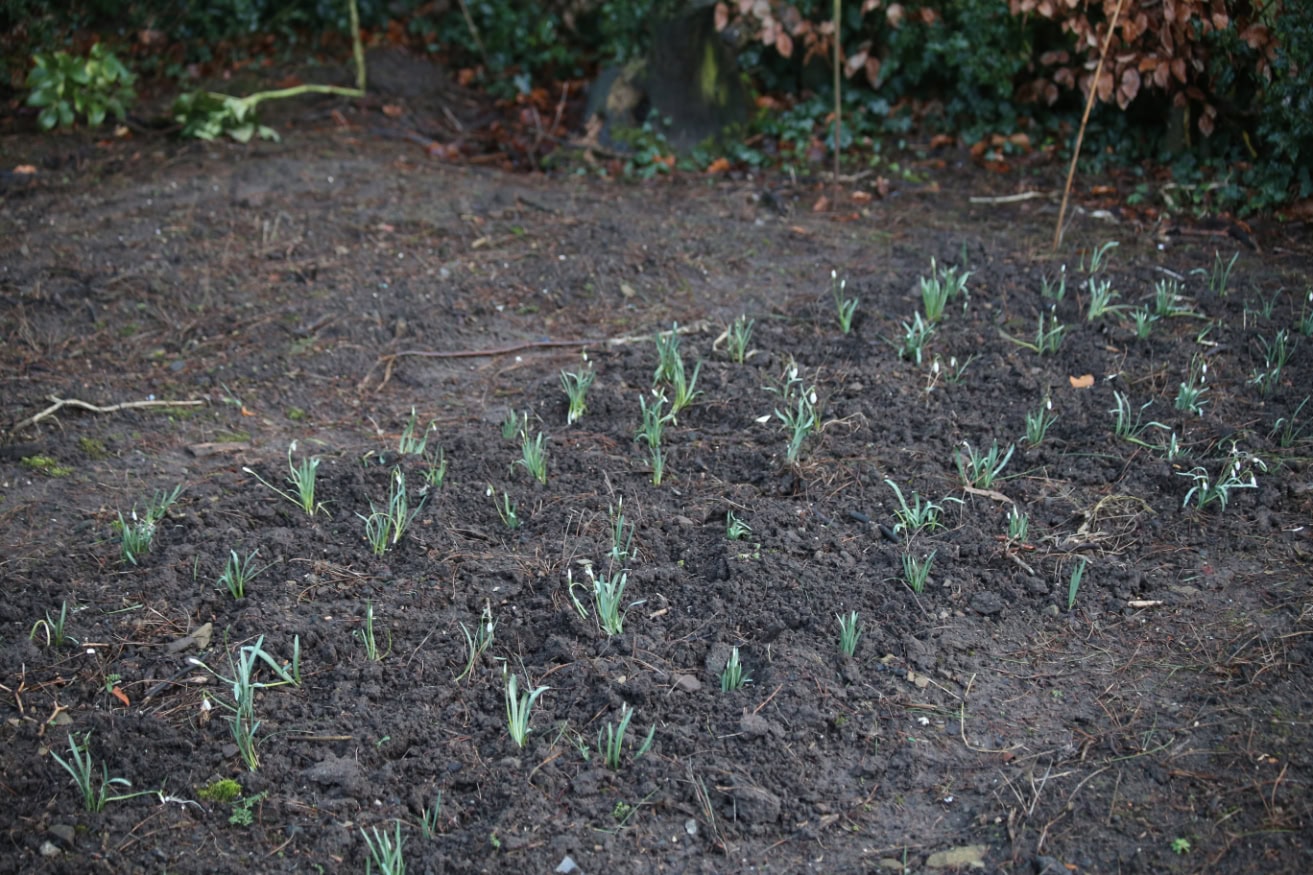
I planted them along the lanes on the outskirts of the village. I also put some by the bench with the wide views. The village children walk these lanes to school. I took pleasure in knowing people would see them. They will know spring is on its way. Planting them now gives them the best head start to flower again next February.
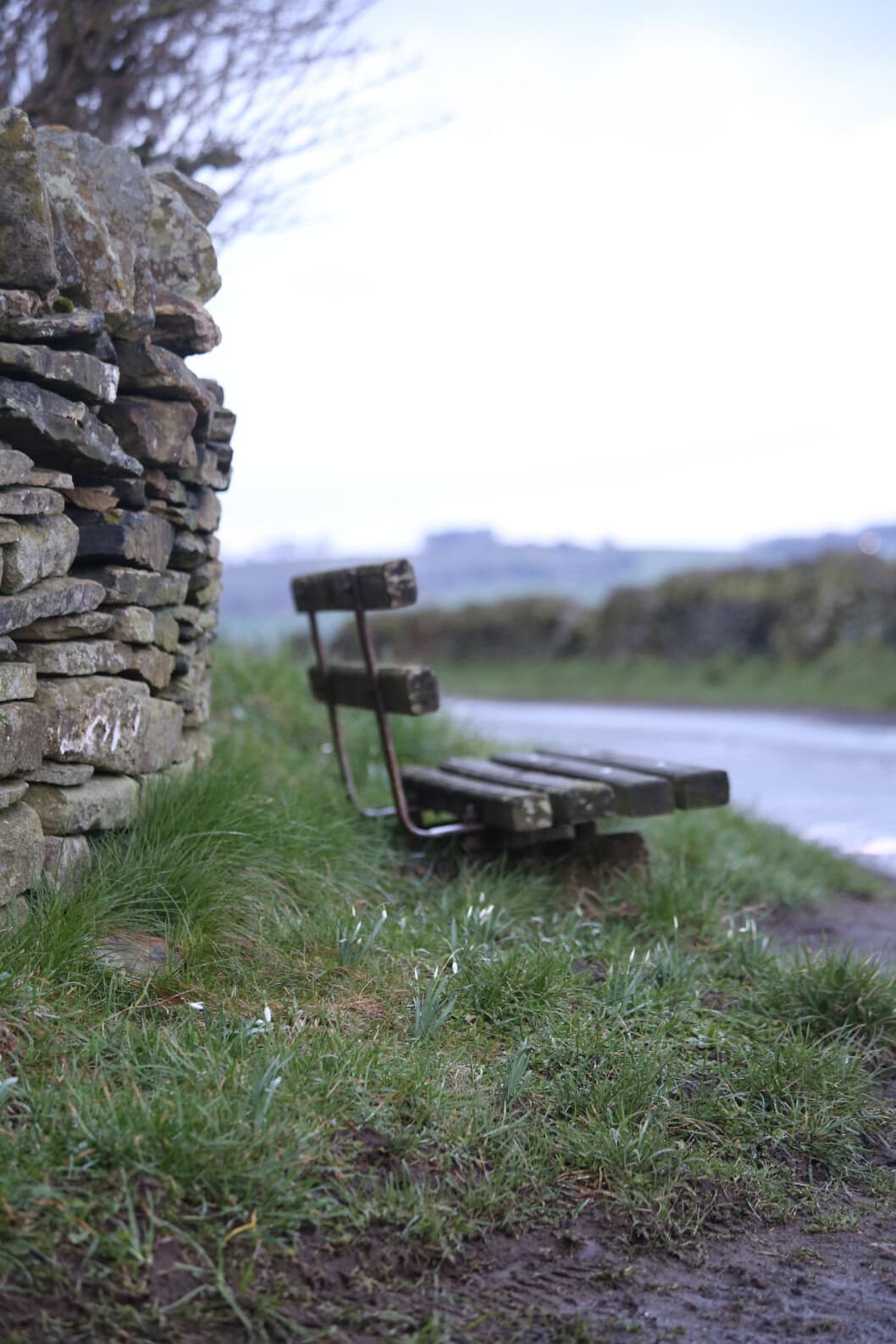
It was a damp day. I had Radio 3 Unwind playing from my phone, tucked it in a trug in the wheelbarrow for resonance. It provided a meditative choral soundtrack through the mist and drizzle, as I tucked in pinches of bulbs and carefully avoided dog turds in the rough verge.
An old trenching spade with a broken handle was the perfect tool. I pulled the clumps apart and threw little bunches where I wanted them, then followed along. I pushed the spade down, pulled a slit, and dropped the bulbs in. Finally, I closed the hole with my heel. I love finding an efficient rhythm.
Naturalising for the future
I also planted some in a dedicated bed at the allotment. They are under a big sycamore. They will love the winter moisture there and bulk up over time. Eventually, I will lift and divide those to spread even further.
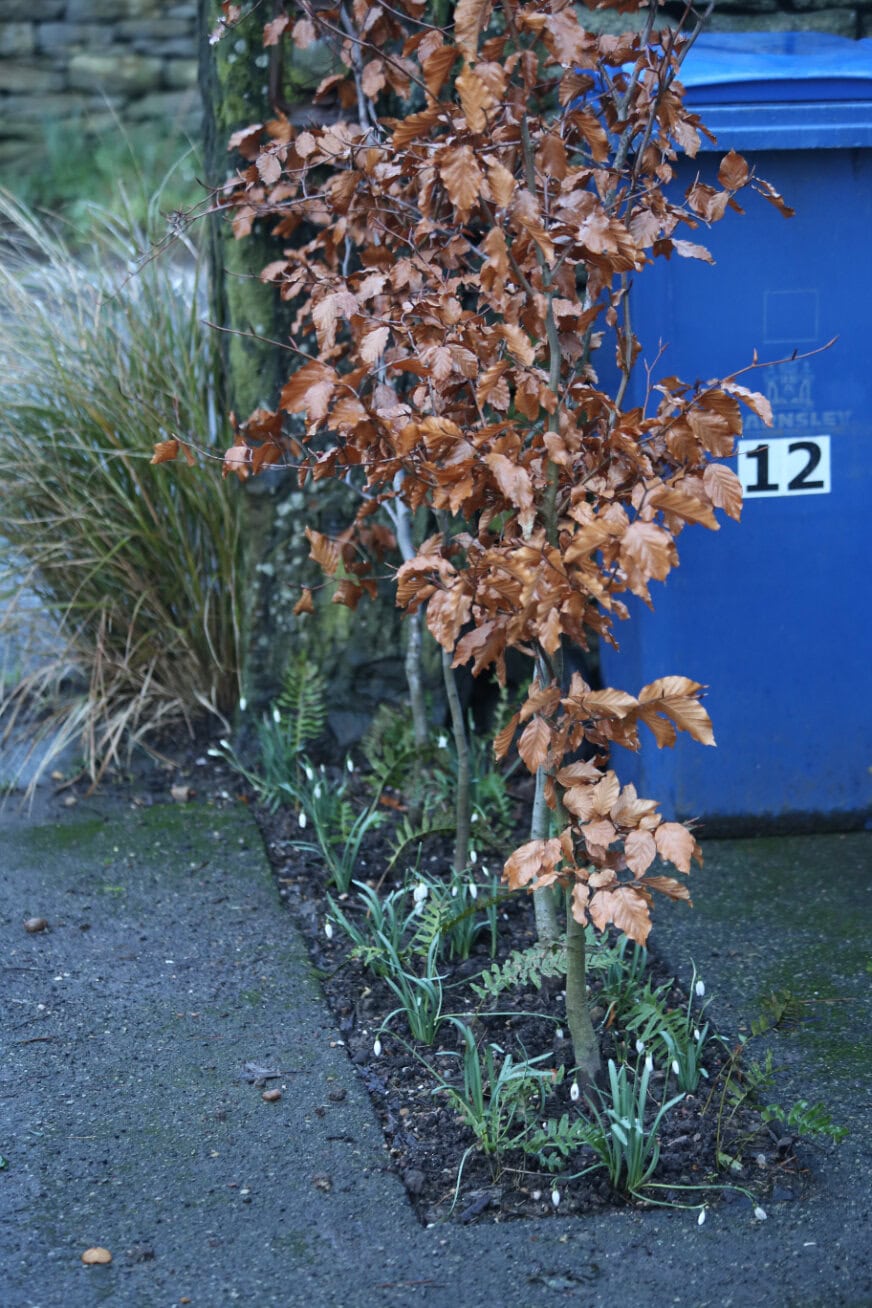
We also used a stone saw this winter to cut through our tarmac driveway. We did this to plant a small beech hedge. At the base, I’ve planted Polypodium vulgare. Now, every spring, these snowdrops will pop through that foliage.
Planting snowdrops in the green isn’t the only way to plant them. I’ve had perfectly good success with autumn planting. The key is to buy fresh bulbs that aren’t dried out. You must plant them as soon as possible.
A human footprint
There is something interesting about how snowdrops grow. They are almost always found in distinct clumps. They rarely seem to grow from seedlings. If they spread by seed, you’d see young foliage of various ages some distance from the parent plant. This is what you see with bluebells and alliums.
Because they stay put, it suggests humans were once involved wherever you find them. Almost every drift of snowdrops in a hedgerow was likely put there by a person. They were either planted intentionally or arrived tipped soil or garden waste. Snowdrops aren’t actually native to the UK. They were brought from Europe in the late 1500s. Every single one represents a human choice. It’s amazing to see a plant so ubiquitous that started as a gift. They are one of humankind’s more positive footprints on the world.