How to Compost: The Lazy Way
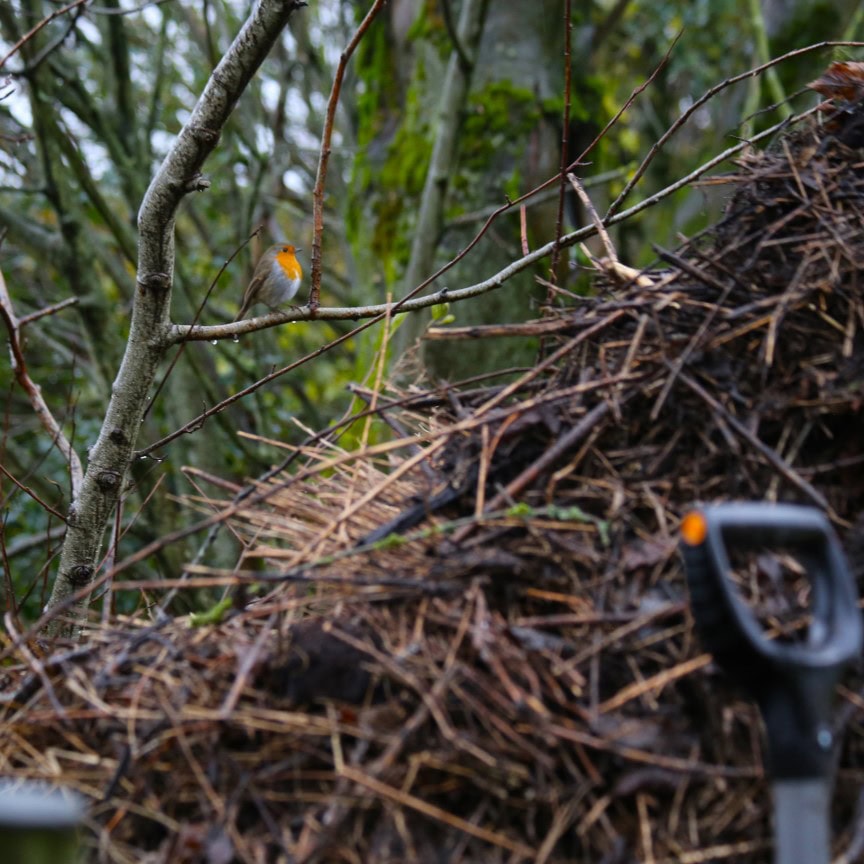
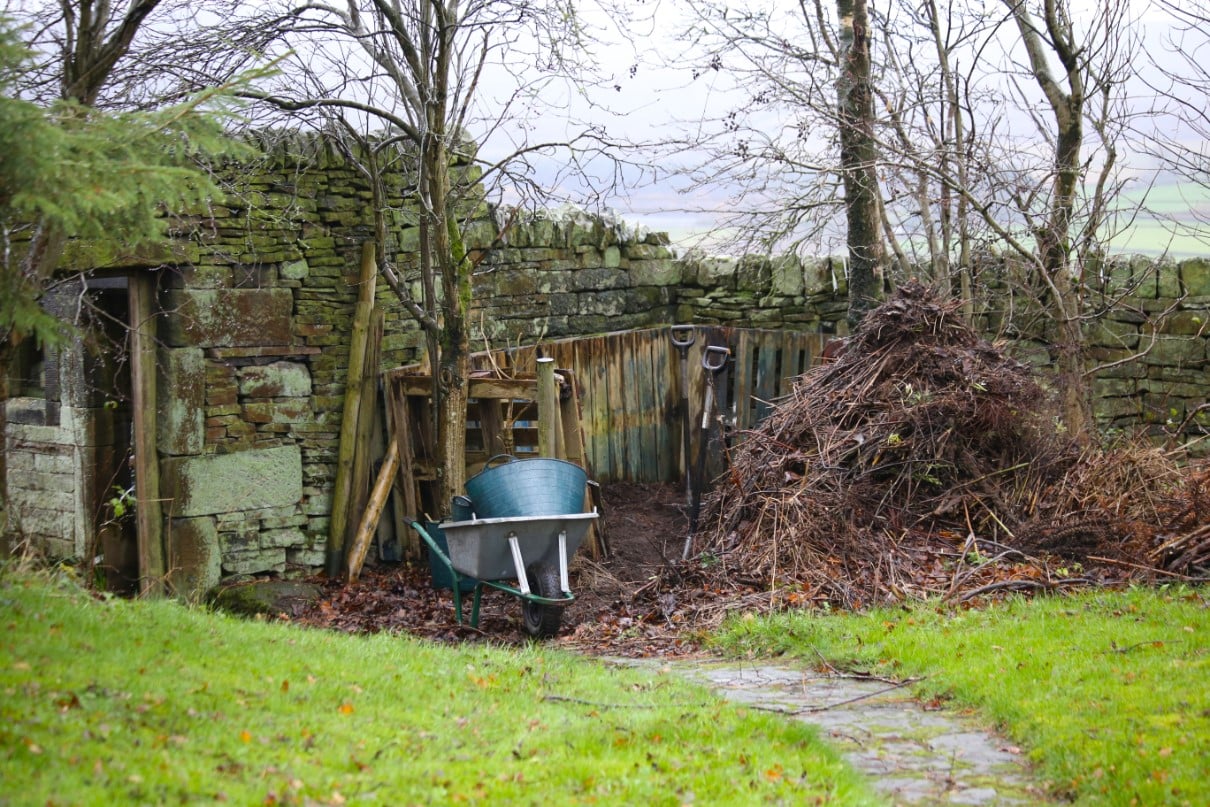
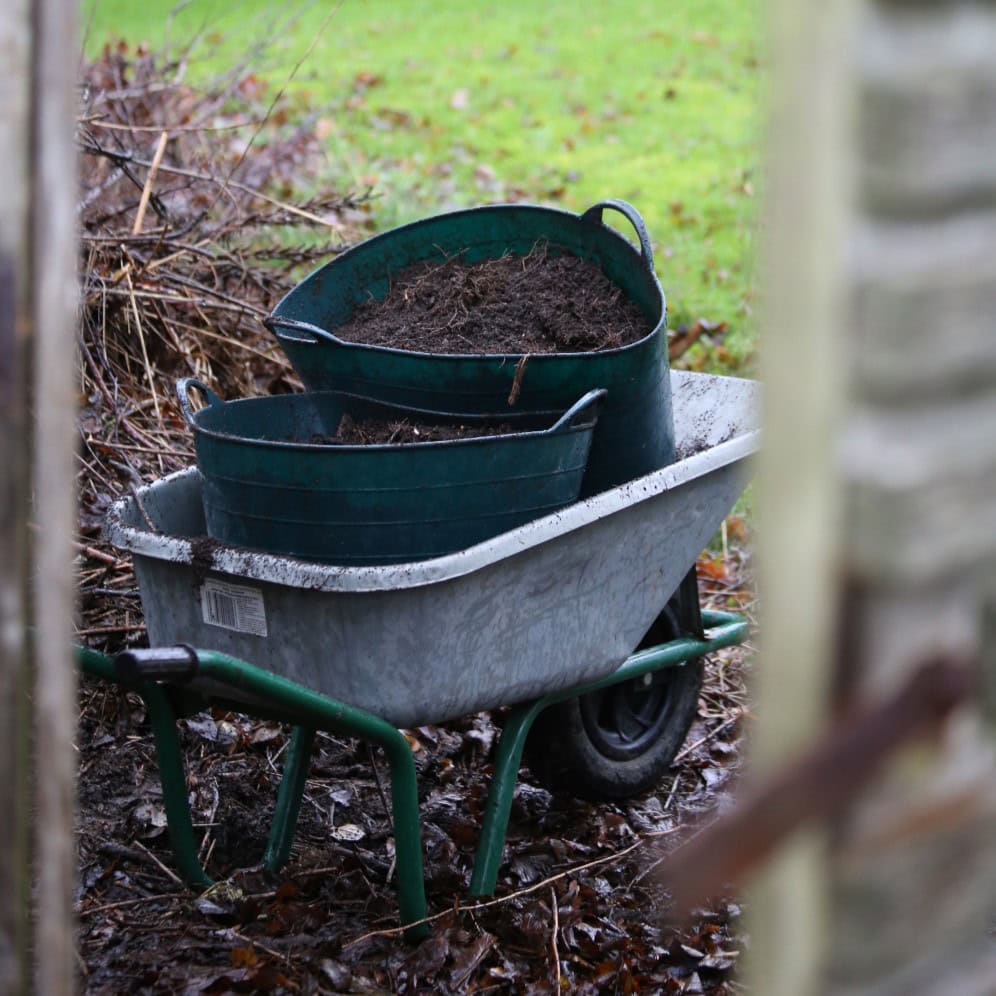
On a very wet Sunday in February, I finally dug out my compost heap. I found exactly what I wanted – rich, dark, finished compost. I spread it on a few choice areas of my allotment and then turned the top of the heap back into the bay to sit for another four or five years. Of course, a robin joined me for the day, catching worms and grubs as I dug through the heap.
I take a very lazy approach to composting, and have a less enthusiastic view of the process than you might expect from a keen gardener. If you ask me how excited I am about compost I would say, mildly. I never turn my heap, except for the necessary disturbance needed to fork the upper part off to access the rich, dark layers beneath. Where I work at The Green Estate, we have a huge industrial composting operation, using machinery and huge hot heaps to process hundreds of tones of green waste and produce top quality weed-free compost that meets the PAS100 standard. If I want weed-free compost that’s where I go for it! But at home, it would be very difficult to achieve this.
Why am I not that excited? The main thing is that my soil is fairly rich and so adding back fertility is undesirable. If anything I am trying to reduce the soil fertility so the planting is moving more towards a wildflower meadow, where low nutrient levels allow an intricate diversity of species to live side by side, as no plant can get big and rich on nutrients and smother all the smaller dainty things. Composting for me is, to be honest, more about processing my “green waste”, while producing some organic matter for pockets that I actually do want to add some nourishment to. Compost heaps are also very valuable garden habitats.
If you want to learn how to compost without the fuss, this “passive” method is pretty much the minimum effort method.
Why Turning Your Compost Isn’t Necessary
Many gardeners believe they must constantly turn their heaps to add oxygen. However, research shows that piles are largely self-aerating through natural convection and the activity of microorganisms.
According to Joe Jenkins, author of The Humanure Handbook, turning compost does little to sustain oxygen levels. Data indicates that within 15 minutes of turning, oxygen levels often return to where they were before you started.
Passive composting works for several reasons:
-
Self-aeration: Research suggests that piles create enough oxygen through natural airflow to complete the process.
-
Reduced nitrogen loss: Studies show that turning a heap actually increases nitrogen loss (up to 85–90%). In contrast, no-turn methods only lose about 70%.
-
Biodiversity: This “cold composting” method relies on fungi, worms, and bacteria that thrive in cooler temperatures. This results in greater biodiversity, which is excellent for soil health.
The Simplest Way to Compost: Forget the Rules
If you search for advice on how to compost, you will often find complicated instructions about exact ratios, layering like a lasagna, and monitoring temperatures. In my experience, in a home garden setting, you can ignore most of this provided you are relaxed about the outcome.
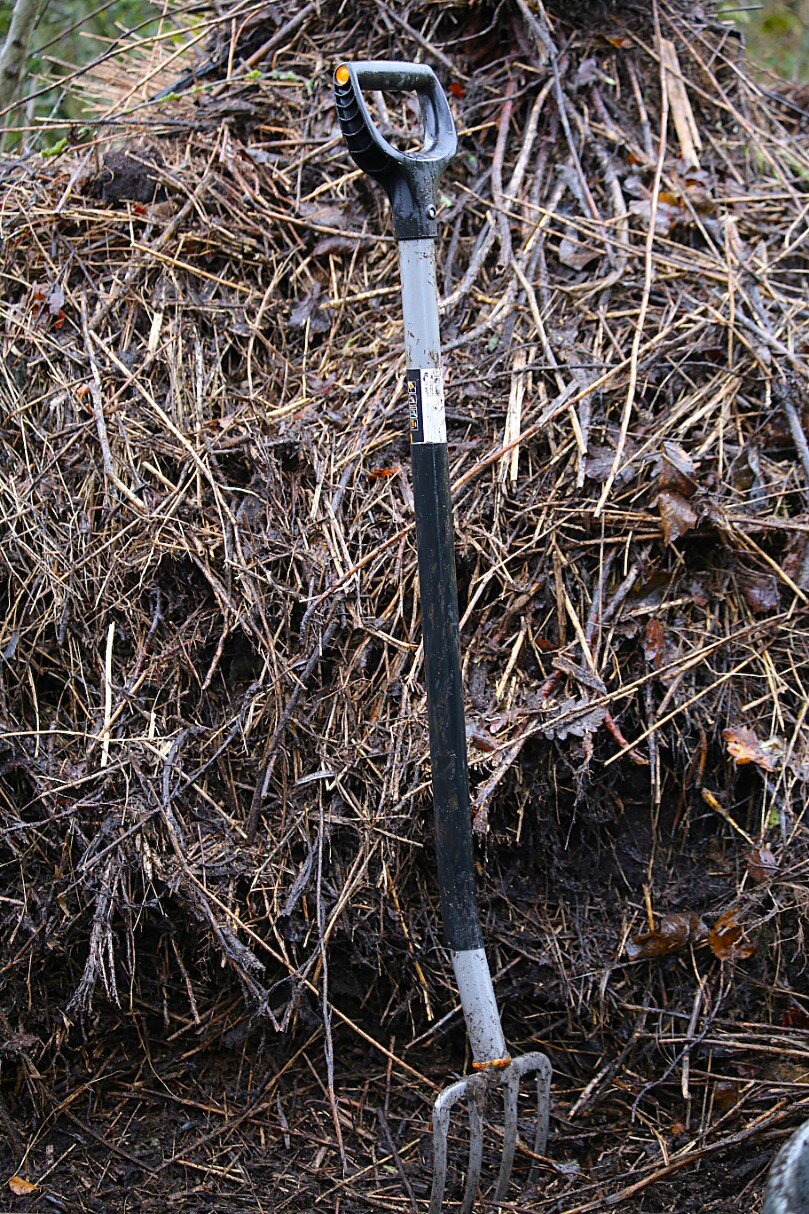
The simplest way to compost is to just pile it up and walk away.
- Don’t worry too much about ratios: Traditional advice often insists on a strict 30:1 carbon-to-nitrogen ratio, Yes, try to avoid pure grass clippings as this will be slimy, but otherwise, you’ll unlikely have major issues.
-
Forget layering: In nature, things don’t fall in perfect layers. As long as you have a mix of materials, the worms will find them.
-
Ignore the clock: Complicated advice is usually for people in a hurry. If you aren’t rushing to use the compost in three months, the “rules” don’t matter.
-
Stop turning: As the research shows, the labor of turning is largely for the gardener’s ego, not the microbes’ benefit.
The Only Two Things That Really Matter:
-
Air space (structure): Make sure there are bulky materials like perennial stems and woody clippings. These create “Free Air Space” (FAS) that allows oxygen to penetrate the center without manual mixing. If you only dump wet grass clippings (high nitrogen) without any sticks or stems (carbon), the pile will collapse into an unappealing green slime.
-
Moisture: Leave the heap open to the rain and let the natural wet and dry season through the year do their thing for decomposition, while also allowing dry periods where the heap provides important habitat.
My Low-Fuss Allotment Method
My allotment gets one big cut a year. I rake the bulk of it into ton bags and tip it on the big heap just outside the allotment gate. The mix is mostly winter stems of herbaceous perennials, ornamental grasses, and shrub clippings. In the summer, I add weeds, hedge clippings, and anything that got the chelsea-chop.
This material is fairly bulky and dry. It breaks down slowly, which is not a problem because I have enough space for the heap to sit. If you have a smaller space, you could shred or mow over the material to speed things up, but I prefer to let time do the work. In about eight years on this allotment, I have only dug out the compost heap twice.
Using Compost to Solve Soil Problems
I use my compost to help a very challenging dry spot on my south-facing, windy allotment. The soil is thin and the nearby trees zap all the moisture. The compost adds nourishment and helps the soil hold onto water for my dry-shade plants. I’ve also recently used it to mulch newly planted fruit trees that I wrote about last month.
The Challenges of a Passive Heap
Research highlights that unturned piles have a few downsides:
-
It takes longer: It can take several years to get a good harvest.
-
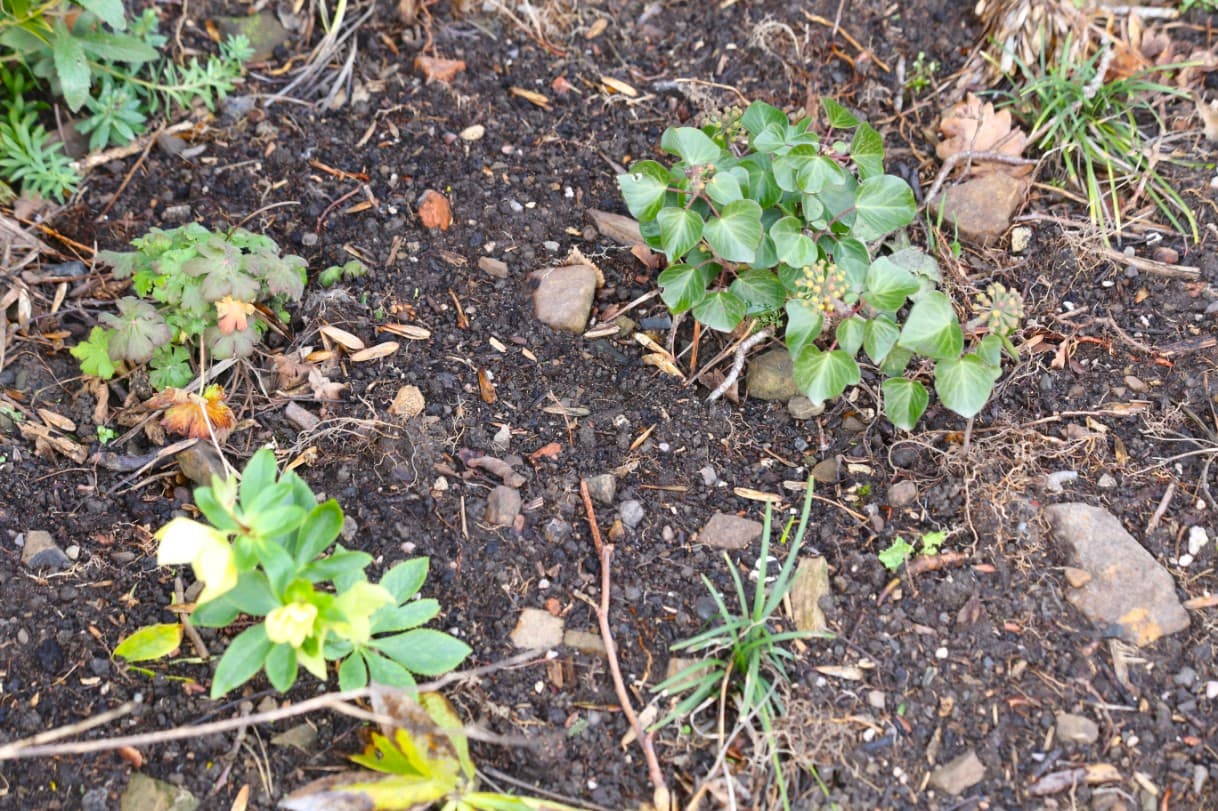
Weed seeds: Cold piles don’t kill seeds. You will get a “green haze” of seedlings where you spread the compost. I keep a separate heap for “nasty” weeds to be burned, but for everything else, I just pull the seedlings as they appear.
As practitioners like Charles Dowding suggest, you can simply place materials in a pile and let the worms do the work. It is a low-labor, high-reward way to feed your garden.