Hardy Chrysanthemums: Low-fuss perennial cut flowers
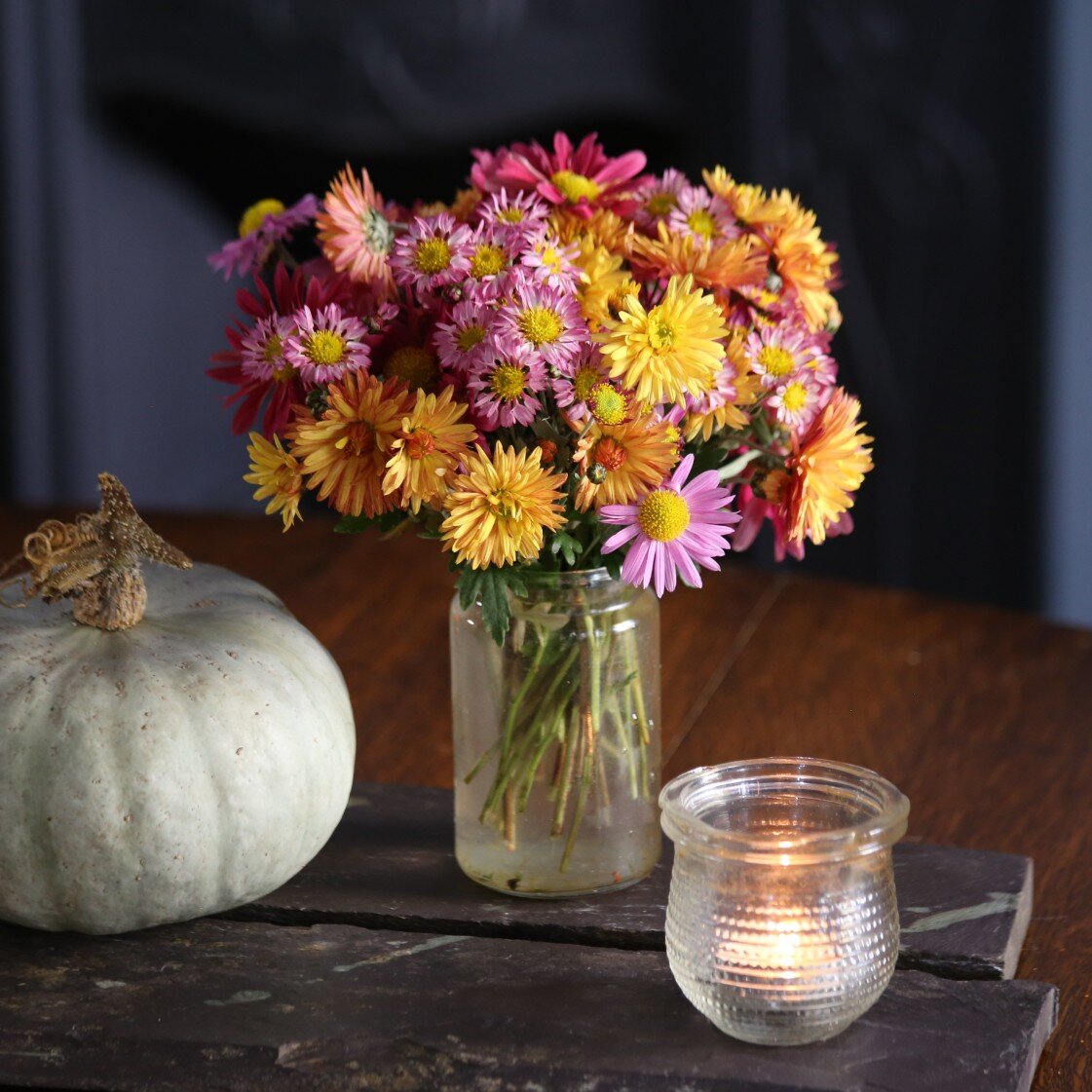
Starting a new allotment is always a lesson in patience and prioritisation. My focus is on perennial cut flowers and perennial vegetables, and fruit trees. One of the key perennial cut flowers are the hardy chrysanthemums, mostly the hardier and earlier flowering Korean types that are best suited to growing outdoors.
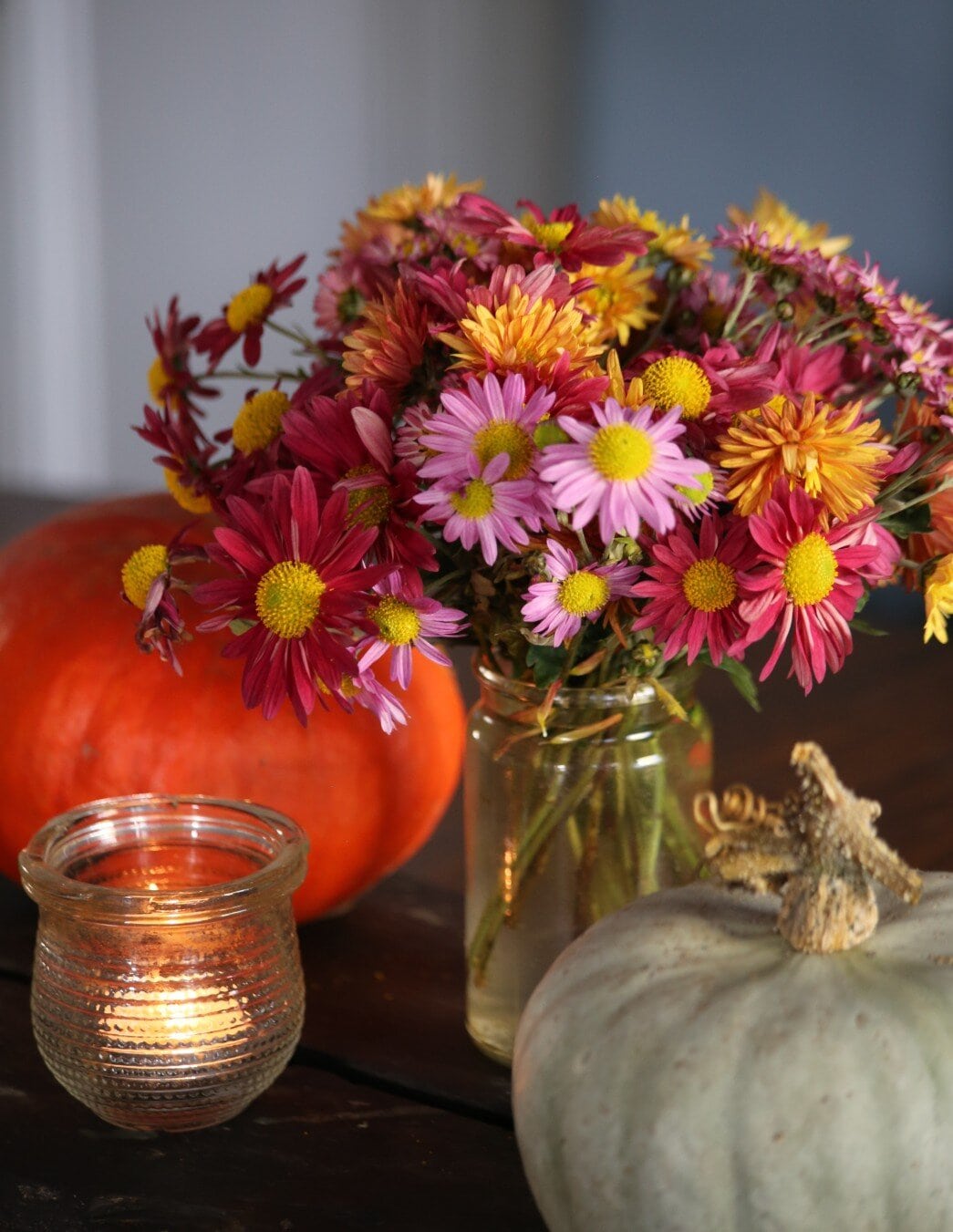
In spring I planted a good handful, a few of these specimens had been shamefully left in their nursery pots on my old allotment for three years. They date back to a trip to Norwell Nurseries in Nottinghamshire with Dean Charlton, back when he had just moved back to Rotherham from Great Dixter to set up his nursery, and I had recently returned to Sheffield after two years working and studying at RHS Wisley.
Despite the neglect, their recovery reminds me how tough they are. On planting, I propagated them directly from the pot, to produce multiple of each plant. While you can take tip or basal cuttings in spring, I took the lazy but effective route: the ‘Irishman’s cutting’. By simply snipping off rooted stems just below ground level in spring or summer, you have an instant, independent plant ready to go.
The Allotment Tradition of Chrysanthemum growing
In the UK, the Chrysanthemum is an old-fashioned allotment flower. For decades, they were the pride of the gentlemen in cloth caps – the specialist growers who spent their evenings and weekends in the potting shed, aiming for that one perfect, massive bloom. This old allotment I’m now on has a history of exactly this type of growing. It even had coal-fired glasshouses for the many varieties that flower so late in autumn they need to be under glass.
Traditionally, allotment culture in the mid-20th century was divided into two camps: the “vegetable men” and the “show men.” Chrysanthemums are the king of the late-season shows. Modern trends have favoured the more instant and flamboyant Dahlia, while hardy chrysanthemums are seeing a come-back as a low-fuss plant for cutting or enjoyment in the border, after many years being associated with competition growing.
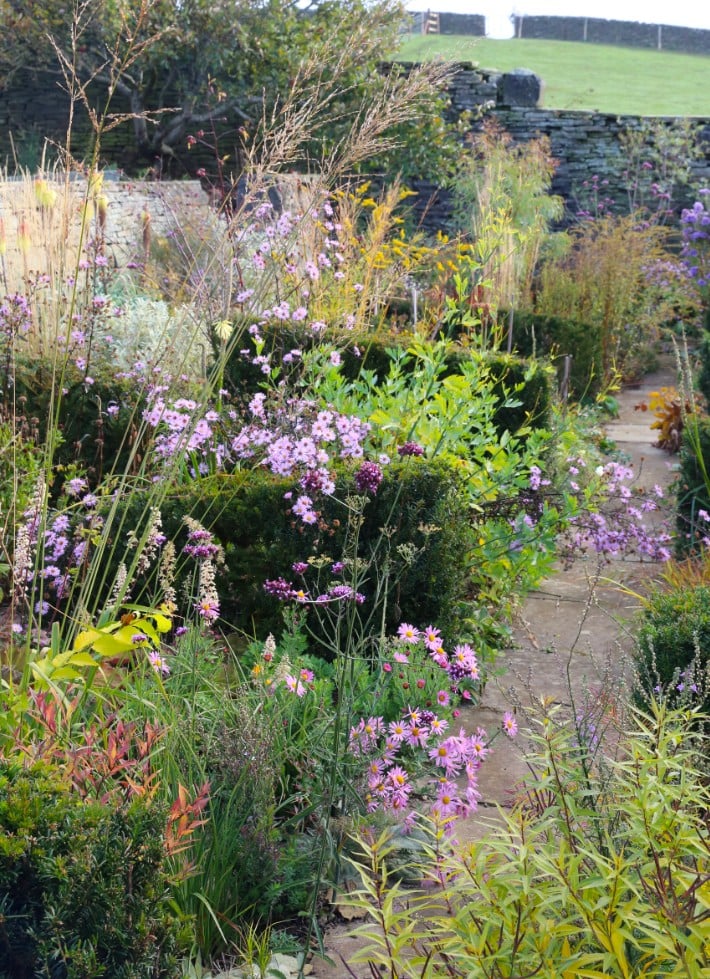
The Perfect Partner for Dahlias
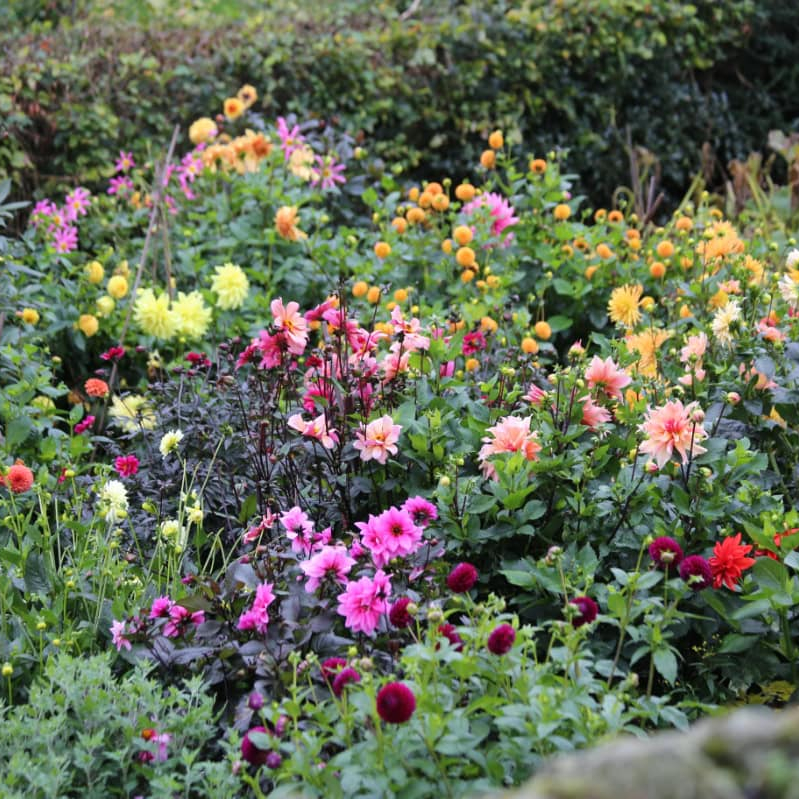
This year, I grew the hardy chrysanthemums alongside a fairly ambitious dahlia patch which I wrote about a few months back. The comparison is striking:
- Timing: Chrysanthemums are the true late-bloomers. While Dahlias peak in late summer, the earliest Chrysanths wait until late September, with some only hitting their stride in late October.
- Habit: They can be unruly. The taller varieties tend to be limp and floppy, requiring support to avoid an untidy look. However, the shorter, stockier cultivars provide a much-needed sturdiness.
- Vase Life: This is where the chrysanthemum reigns supreme. Most dahlias look their best for 3 to 5 days. A jar of Chrysanthemums will hold up for weeks. Even after three weeks, as the flowers fade, they retain their colour and take on a “faded beauty” that Dahlias simply cannot replicate.
- Single flowers: If you love the look of open-centred flowers with cheery yellow middles, choose Chrysanthemums. While most open-centred Dahlias drop their petals in a day or two, open-centred Chrysanths stay vibrant in a vase for weeks.
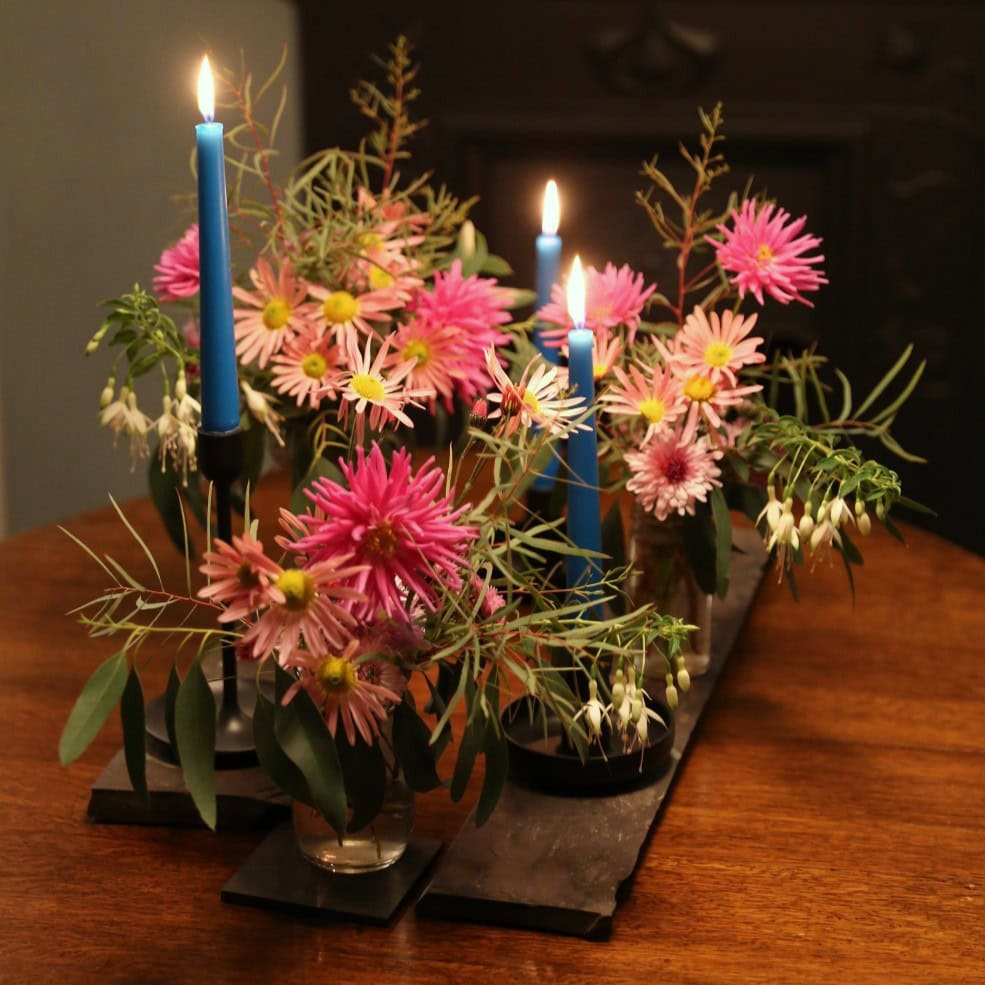
My Cultivar Highlights & Their Histories
The Wisley Influence
- ‘Hillside Apricot’: A standout I brought with me from my time at Wisley. It is used extensively throughout the Rose Garden there. It’s a classic “Korean” type—hardy, reliable, and possessing a soft, warm hue that bridges the gap between summer and autumn.
The Beth Chatto Selection
- ‘Clara Curtis’: One of the most famous Chrysanthemum rubellum hybrids. It produces domes of clear-pink, single daisy flowers. It has been a staple of English cottage gardens for generations.
- ‘Emperor of China’: A truly ancient variety, mentioned in horticultural texts as early as the 19th century. Easily recognized by its silvery-pink quilled petals and foliage that turns a rich ruby-red as the temperature drops.
The Norwell Collection
- ‘Carmine Blush’: A Norwell favourite with deep, saturated tones.
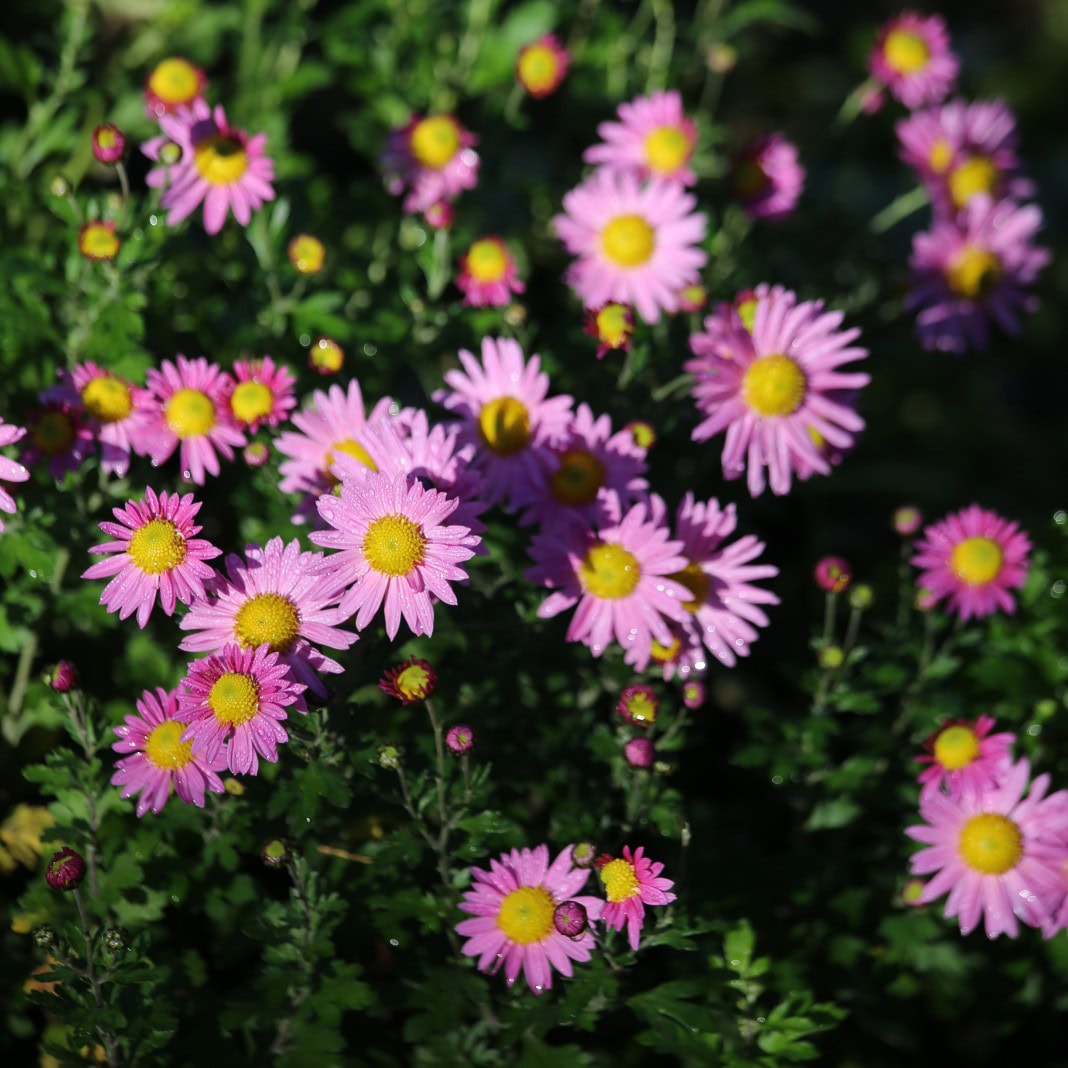
- ‘Šlapanická Eliška’: Also often just called ‘Eliska’. The best variety of this list, by far. Stocky and sturdy, flowered earliest and longest. Hailing from the Czech Republic, this cultivar brings a touch of continental breeding to the plot, known for its prolific flowering.
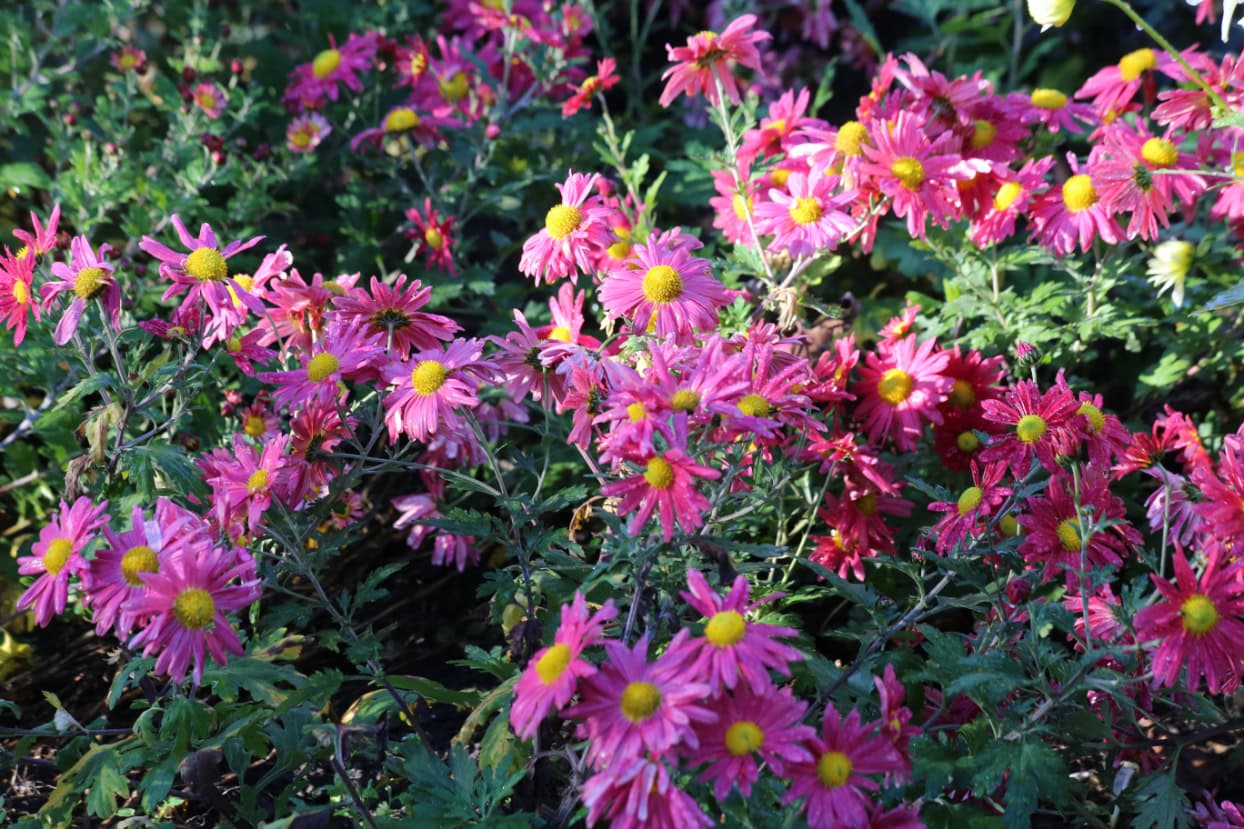
- ‘Rumpelstilzchen’: A German variety featuring rusty-red, double flowers tinged with gold. True to its name, it’s a sturdy little “imp” of a plant. Beaut
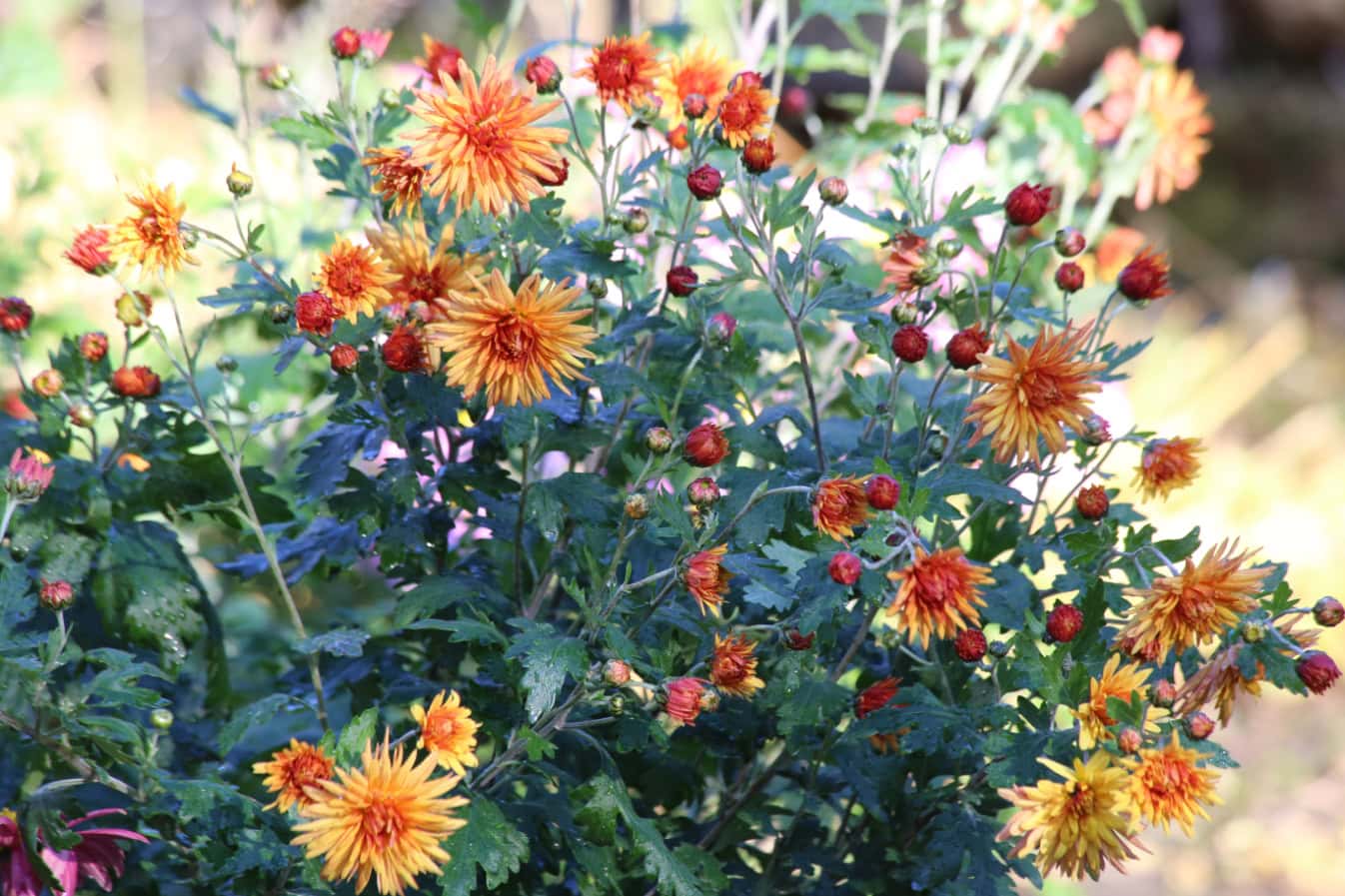
- ‘Will’s Wonderful’: A unique specimen with small, pale pink petals that are almost tubular. It opens from deep red buds to reveal a creamy strawberry-pink that fades to straw-gold.
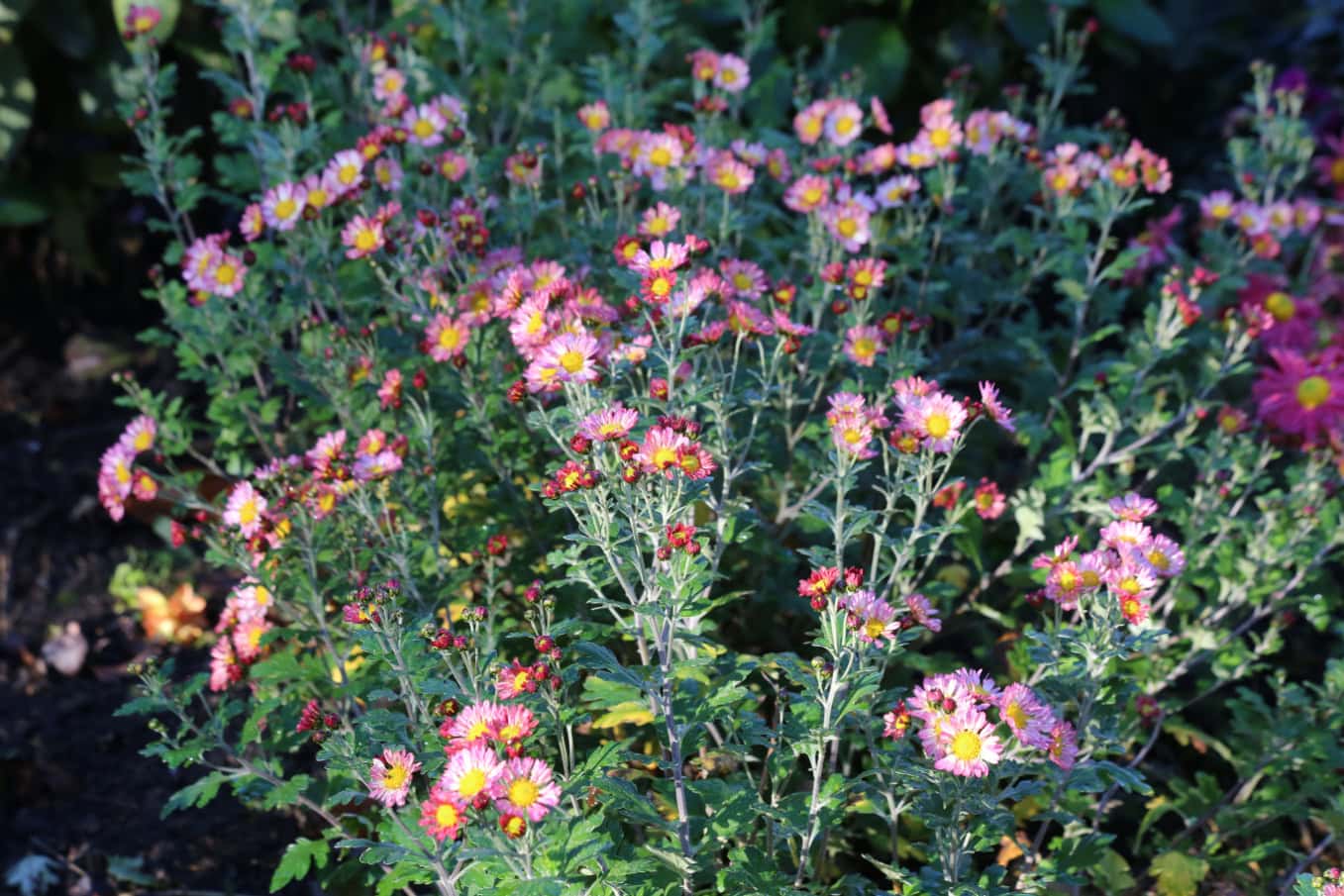
Gardening is rarely without its losses. I sadly lost ‘Dixter Orange’ during the exceptionally wet winter of ‘23-24. It’s a reminder that while these plants are tough, drainage remains their Achilles’ heel. I’m already planning a trip to Hooton’s Walled Nursery in Rotherham to replace it this year.
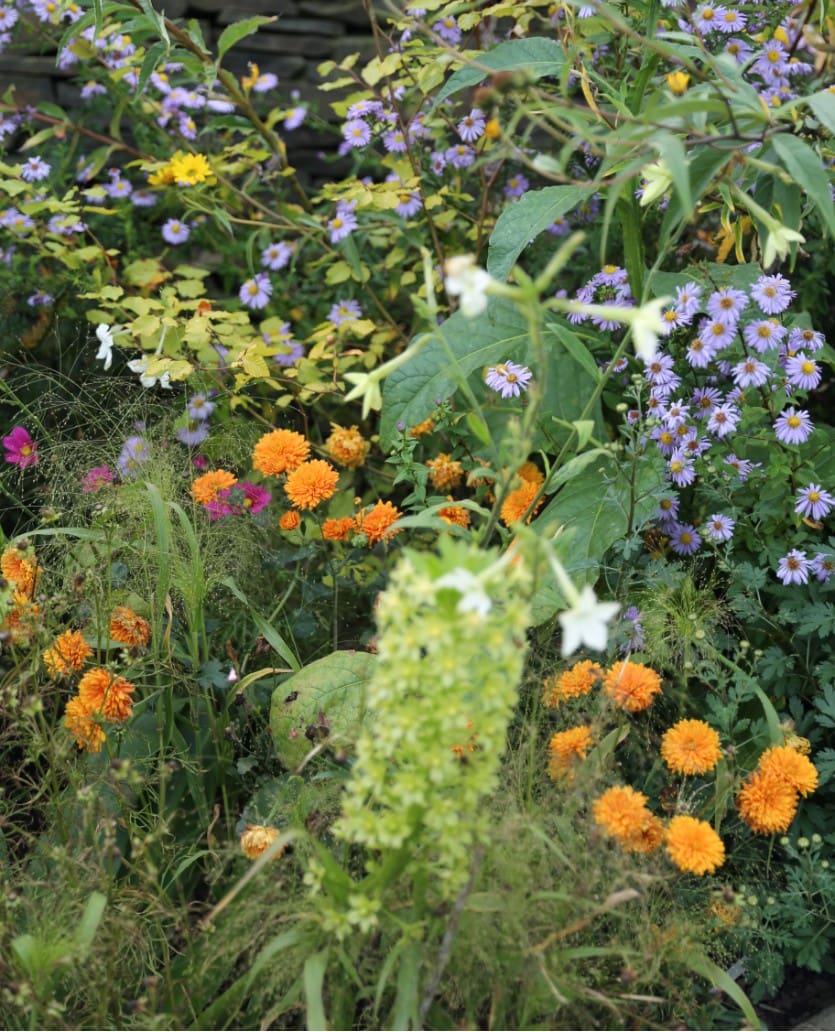
When the first frosts arrive and the Dahlias turn to black mush overnight, the Chrysanthemums stand their ground. They might look a bit bedraggled in the garden, but once cut and brought inside, they perk up immediately—a final, defiant burst of colour before the winter sets in. A few are blooming now as we enter late December, let’s see if we have a few for the table at Christmas.